The timing advantage: When first isn’t always best
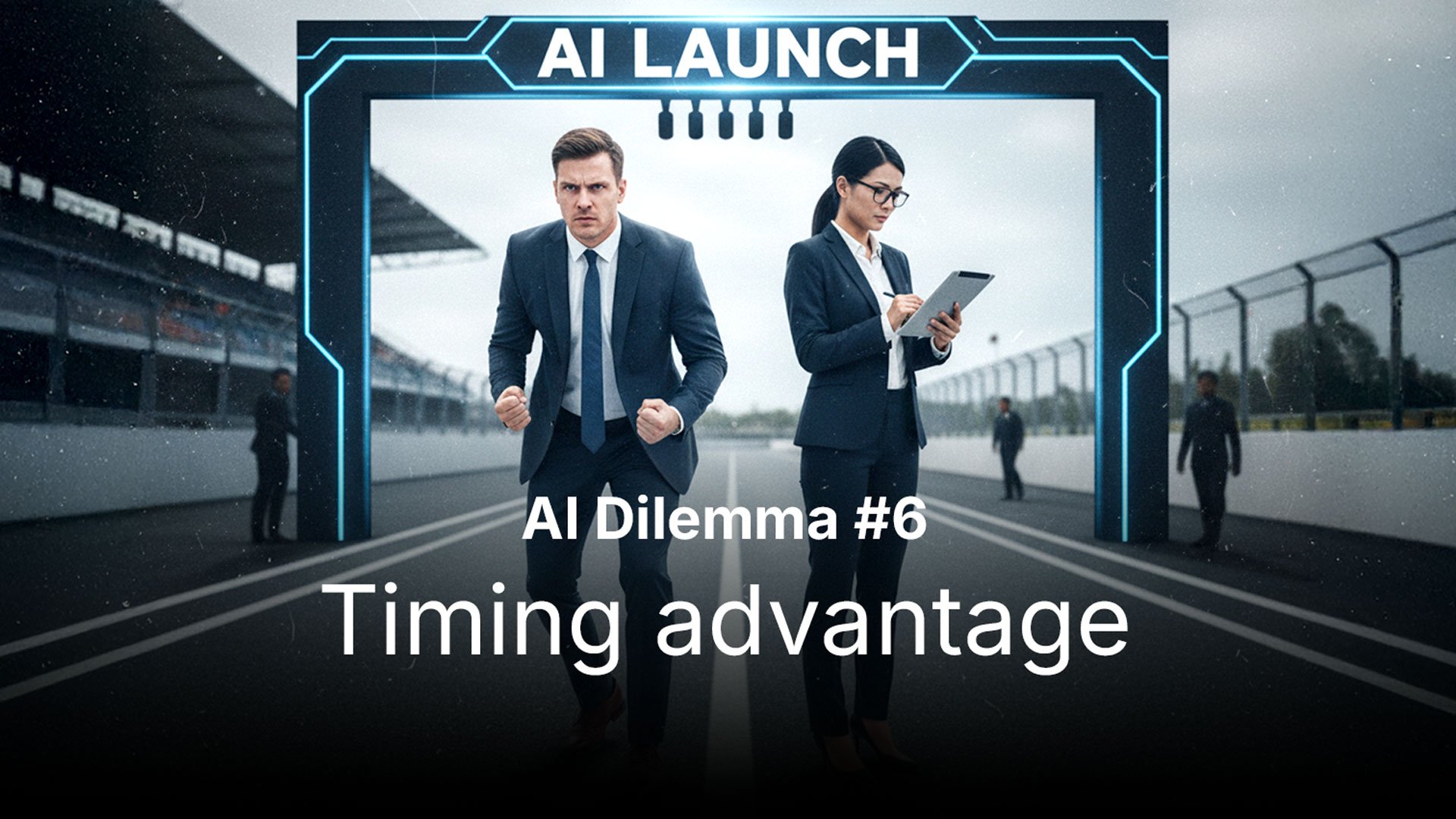
Every technology wave tempts leaders with the same question: Should we move first — or move right?
AI has brought that tension into sharp relief. On one side stand the pioneers, sprinting ahead, chasing headlines and market share. On the other side, the patient operators, quietly observing, waiting for the chaos to settle before they place their bets. Both believe they’re playing the smarter game.
Both might be wrong.
First or best — the paradox of AI timing
Being first feels heroic. The early mover defines the language, shapes the standards, and captures attention. But pioneering is expensive — in money, in credibility, in sleep. You’re the one explaining the value proposition while the market still squints in confusion. You’re also the one fixing the bugs live, in public view.
Being the best, on the other hand, feels safer. Let others make the mistakes. Let them teach the regulators, burn the budget, and educate the customer. Then arrive polished, smarter, and less bloody. But by then, the audience might have moved on — or the rules of the game might have changed.
This is the paradox of AI timing: both speed and patience carry risk. Move too early, and you waste brilliance on an unready system. Move too late, and your most brilliant plans arrive at an empty theater.
The truth is, AI doesn’t reward impatience or caution
AI adoption doesn’t obey the old “first-mover advantage” logic. AI isn’t a product; it’s a capability. The first to experiment may not win — but the first to learn always does. The organizations that build AI literacy early create a compounding advantage, even if their first tools fail. They don’t just ship faster; they adapt faster.
So maybe the question isn’t about being first or best. Maybe it’s about being awake.
Awake to the signals that matter. Awake to when a pilot stops teaching and starts draining. Awake to when the curve of learning turns into the cliff of diminishing returns.
Because the real timing advantage isn’t a calendar event. It’s a state of readiness — cultural, technical, strategic. It’s the ability to shift gears before the terrain changes, to sense when “not yet” becomes “too late.”
The companies that master AI timing don’t rush, and they don’t freeze. They pulse — testing, learning, pausing, scaling — in rhythm with reality, not hype. They see that “first” and “best” are just moments. What matters is momentum.
AI doesn’t reward impatience or caution. It rewards awareness. And awareness is a leadership skill, not a launch date.
Or?
Joachim Cronquist is a strategic AI advisor and founder of Cronquist AI. He helps business leaders turn AI into business clarity and measurable results.
Loading...
...
Loading...
...