Human or alien intelligence: rethinking what we want from AI
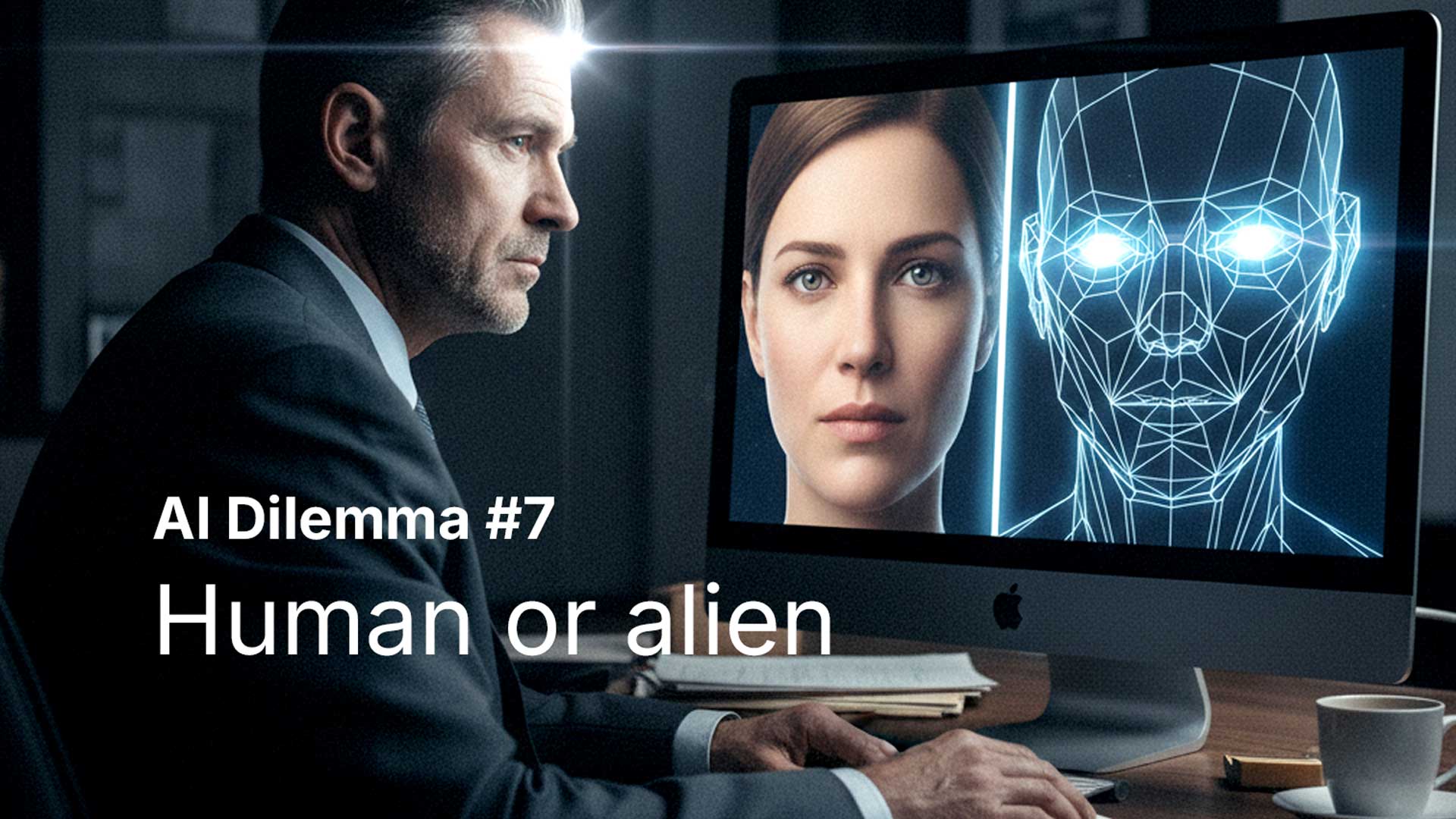
For as long as we’ve imagined intelligent machines, we’ve pictured them in our own image. Smooth conversationalists. Reasonable thinkers. Digital employees who never sleep, never argue, and never ask for equity.
It’s a comforting illusion: intelligence that mirrors human logic, empathy, and judgment. But is that really what we need?
Artificial intelligence doesn’t think like us — and maybe that’s its greatest gift. A language model doesn’t “understand” the way a strategist does. A vision system doesn’t “see” as an engineer sees.
Yet both can notice patterns no human would, connect fragments too scattered for intuition, and generate paths no one considered. What we call “alien” might simply be different degrees of human limitation being removed.
Still, we resist the alien
We wrap AI in friendly interfaces, train it on our tone of voice, and insist it explain itself in familiar terms. We domesticate it — the way we once tamed horses and steam engines — until it feels safe.
The problem is, safety can sterilize creativity.
By forcing AI to imitate us, we risk teaching it our blind spots, our assumptions, and our collective mediocrity.
Of course, letting AI think differently comes with discomfort. Machines that reason in ways we can’t trace challenge our sense of control. When the logic is opaque, accountability becomes slippery. Leaders cannot simply hand over the keys to an alien mind and hope for insight without consequence.
So perhaps the task isn’t to humanize AI...
...nor to surrender to it.
It’s to collaborate across species of intelligence — human and machine — each playing to its strengths. Humans bring context, ethics, and meaning. Machines bring scale, speed, and strangeness. The art lies in weaving both into decision systems that expand what’s possible without eroding what matters.
AI shouldn’t replace human judgment; it should disturb it — gently but persistently — so that new forms of judgment emerge. When we stop demanding that AI think like us, we start asking how we can think better because of it.
The future of intelligence might not look human at all. And maybe that’s the most human thing about it.
Or?
Joachim Cronquist is a strategic AI advisor and founder of Cronquist AI. He helps business leaders turn AI into business clarity and measurable results.
Loading...
...
Loading...
...